
The century of states
The twentieth century is the period when the state reached its largest size and its greatest reach into ordinary life. States conscripted whole populations, ran whole economies, fed and schooled and vaccinated their citizens, and killed on a scale nothing before had matched. Two world wars and one long standoff between two blocs shaped everything else. In the same ninety years human life expectancy rose further than in all previous history, because of antibiotics, vaccines, and more food. Both of those things are true at once, and the century has to be read with both in view.
- 1903 CE — Powered flight. Wilbur and Orville Wright fly a powered aircraft under control at Kitty Hawk in North Carolina. The first flight covers about 37 metres and lasts twelve seconds. Sixty-six years later a person walks on the Moon.
- 1908 CE — The car reaches ordinary people. Ford introduces the Model T. It is designed to be made in quantity and repaired by its owner, and its price falls over the following years rather than rising. The car stops being a machine for the rich.
- 1913 CE — The assembly line. Ford moves the work past the worker rather than moving the worker around the product. Assembly time for a car falls from over twelve hours to about ninety minutes. The method spreads to every industry, and it also fixes each worker in one repeated task, which is why the assembly line appears in every later argument about industrial work.
- 1914 to 1918 CE — The First World War. Industrial production is turned to killing for the first time at full scale. Machine guns, artillery, poison gas, submarines, and aircraft are used together, and about nine million soldiers die. Four empires end: the German, the Austro-Hungarian, the Russian, and the Ottoman. The borders of Europe and the Middle East are redrawn, and several of those lines are still argued about.
- 1914 CE — The first scheduled airline. A service starts across Tampa Bay in Florida, carrying one passenger at a time. Commercial aviation begins in the same year as the war that develops the aircraft.
- 1917 CE — The Russian Revolution. The Bolsheviks take power and establish a state built on Marx's arguments from 1848. The Soviet Union is also the first state to declare itself officially atheist and to restrict religious practice as policy. For the next 74 years a large part of the world is governed on principles opposed to those of the other large part.
- 1918 to 1920 CE — The influenza pandemic. A strain of influenza spreads worldwide and kills more people than the war that preceded it. Estimates of the death toll range from about 25 million to 50 million and higher, and they are estimates, because record-keeping in the worst affected regions was poor. Unusually for influenza, it killed healthy young adults in large numbers.
- 1918 to 1939 CE — The interwar years. Democracies established after the first war fail across much of Europe and are replaced by dictatorships. Economic collapse, unpaid war debts, and unemployment supply the conditions. The period is short, and it ends in a larger war than the one before it.
- 1920s CE — Radio. Broadcasting reaches homes across Europe and North America. For the first time one voice speaks to millions of people at the same moment, live, without any of them being able to reply. Every government of the period understands this immediately, and states either run the broadcasters or regulate them closely.
- 1928 CE — Penicillin. Alexander Fleming notices that a mould kills bacteria on a culture plate. It takes another team, and the demands of the Second World War, to turn the observation into a mass-produced drug in the 1940s. Infections that had routinely killed people become treatable.
- 1929 CE — The crash. The American stock market collapses, and a decade of depression follows across the industrial world. Unemployment reaches a quarter of the workforce in some countries. Governments respond by taking a far larger role in the economy than before, and that role does not shrink again.
- 1939 to 1945 CE — The Second World War. The deadliest conflict in history, with estimates of total deaths between 70 and 85 million, most of them civilians. It includes the Holocaust, the systematic murder of about six million Jews along with millions of others. It ends with the use of nuclear weapons on two cities. Every institution described in the rest of this page was built in response to it.
- 1944 CE — Bretton Woods. Delegates from 44 countries agree a system of fixed exchange rates tied to the United States dollar, which is itself tied to gold. The International Monetary Fund and what becomes the World Bank are created. World trade now runs on rules agreed between governments rather than on whoever holds the strongest navy.
- 1945 CE — Nuclear weapons. Atomic bombs are used on Hiroshima and Nagasaki. For the first time a state holds the ability to destroy another state's cities within hours, and within a decade more than one state holds it. The same physics also supplies nuclear electricity from the 1950s.
- 1945 CE — The first electronic computers. Machines built during and just after the war, including ENIAC in the United States and the earlier Colossus in Britain, do calculation electronically rather than mechanically. They are built for artillery tables and codebreaking. They fill rooms and are programmed by rewiring.
- 1945 CE — The United Nations. Fifty-one countries sign the founding charter. The organisation exists because the previous attempt, the League of Nations, failed to prevent the second war. Its record since is argued about, and it has not been replaced.
- 1948 CE — The Universal Declaration of Human Rights. The United Nations adopts a list of rights held by every person regardless of country, including freedom of thought, conscience, and religion. It is a declaration rather than a law, so it cannot be enforced directly. It is the reference point for almost every human rights argument since.
- 1947 to 1991 CE — The Cold War. The United States and the Soviet Union oppose each other for 44 years without fighting each other directly. They fight through allied states, through proxy wars, through spending, and through competition in science and space. Both build enough nuclear weapons to destroy the other several times over, which is the reason the direct war never happened.
- 1947 to 1975 CE — Decolonisation. European empires end across Asia and Africa. India and Pakistan become independent in 1947, and most of Africa follows between 1957 and 1975. Dozens of new states appear, many of them inside borders drawn by the departing powers rather than by the people living there.
- 1947 CE — The transistor. Bell Laboratories builds a device that switches and amplifies electrical signals with no moving parts and no heated valve. It is small, uses little power, and can be made in quantity. Every computer, phone, and electronic device since is built from these.
- 1950s CE — Television in homes. Television becomes normal household equipment across the industrial world. It combines what radio did with pictures, and it becomes the main way most people see events they did not attend. Political life adapts to it within a decade.
- 1950s to 1960s CE — The Green Revolution. New wheat and rice varieties, together with fertiliser and irrigation, raise harvests sharply in Mexico, India, and elsewhere. Famines that had been predicted did not happen. The methods also increased dependence on fertiliser, fuel, and water, and those costs are still being counted.
- 1956 CE — The container ship. Malcom McLean sends a ship carrying standard steel boxes from Newark to Houston. Loading a ship had been slow, expensive, and done by hand. Containers cut the cost of moving goods across an ocean so far that it stops being a significant part of the price of most products. Global manufacturing depends on this more than on any trade agreement.
- 1957 CE onward — The Space Age. The Soviet Union launches Sputnik, the first artificial satellite. Human spaceflight follows in 1961 and the Moon landing in 1969. Satellites also become the infrastructure for communication, navigation, and weather forecasting, which is the part that affects daily life.
- 1958 CE — Mass air travel begins. Jet airliners start regular transatlantic service. Journey times fall by more than half against propeller aircraft, and costs fall as the aircraft carry more people. Crossing an ocean stops being a voyage and becomes a trip.
- 1960s CE — Universities and the pill. Higher education expands from a small minority to a large share of young people across the industrial world. The contraceptive pill is approved and becomes widely available during the same decade. Both change who works, when people have children, and how long education lasts.
- 1962 to 1965 CE — The Second Vatican Council. The Catholic Church holds a council that permits worship in local languages instead of Latin, and reorganises its relationship with other churches and other religions. It is the largest institutional change in the Church since the Reformation.
- 1969 CE — ARPANET. The first message is sent between two computers on a network funded by the United States defence department. The design assumption is that the network must keep working when parts of it fail. That assumption is why the internet has no centre.
- 1971 CE — Two changes. Intel releases the first commercial microprocessor, putting a computer's processing on a single chip. In the same year the United States ends the convertibility of the dollar into gold, which breaks the Bretton Woods system. Money is now backed by the states that issue it and by nothing physical.
- 1973 CE — The oil crisis. Oil-producing states restrict supply, and the price rises sharply. Industrial economies discover how completely they depend on one imported commodity. Fuel efficiency, energy policy, and the search for alternatives all start being taken seriously here.
- 1970s onward CE — Offshoring. Cheap containerised shipping, falling tariffs, and telephone and later data links let a company make its goods in one country and sell them in another. Manufacturing employment falls in the industrial countries and rises sharply in Asia. The effects on both sides are still being argued about.
- 1977 to 1981 CE — The personal computer. Machines from Apple, Commodore, Tandy, and then IBM put a computer on a desk at a price a household or a small business can pay. Computing stops being something an institution owns and becomes something a person owns.
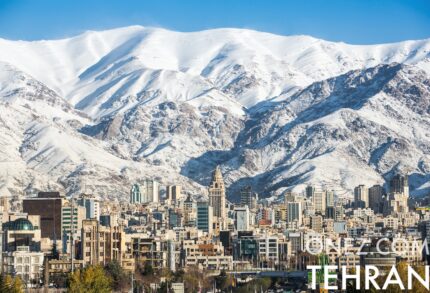
- 1979 CE — The Iranian revolution. Iran replaces a monarchy with a state governed on religious authority. The assumption held through most of the century, that modernising states would become steadily less religious in their politics, stops holding.
- 1980 CE — Smallpox eradicated. The World Health Organization declares smallpox eliminated worldwide after a vaccination campaign lasting more than a decade. It is the only human disease ever eradicated. The method started with Jenner in 1796.
- 1981 CE — HIV identified. The first cases are reported, and the virus is identified in 1983. The pandemic that follows kills tens of millions. Treatment developed in the 1990s turns it from a fatal illness into a manageable one for those who can get the drugs.
- 1989 CE — The web. Tim Berners-Lee, working at CERN in Switzerland, proposes a system of linked documents readable through a common program. The internet had existed for twenty years and was used by specialists. The web is what makes it usable by anyone, and the next page follows what happened.
The countries in this list
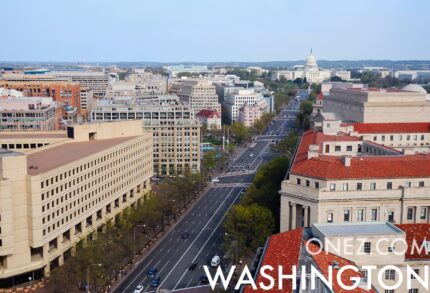
These are the countries where the events above took place. Each card below opens that country's page on this site.




All posts of "From the Big Bang to Modern Civilization"
1. From the Big Bang to the first humans
1. From the Big Bang to the first humans
2. The other human species
2. The other human species
3. How humans filled the planet
3. How humans filled the planet
4. Farming, surplus, and the animals humans tamed
4. Farming, surplus, and the animals humans tamed
5. The six cradles of civilization
5. The six cradles of civilization
6. The civilizations that grew from the six
6. The civilizations that grew from the six
7. What happened after the first cities
7. What happened after the first cities
8. The age of empires
8. The age of empires
9. The Industrial Revolution
9. The Industrial Revolution
11. Modern Era Society
11. Modern Era Society
How societies grew from bands to states
How societies grew from bands to states
The world’s great rivers