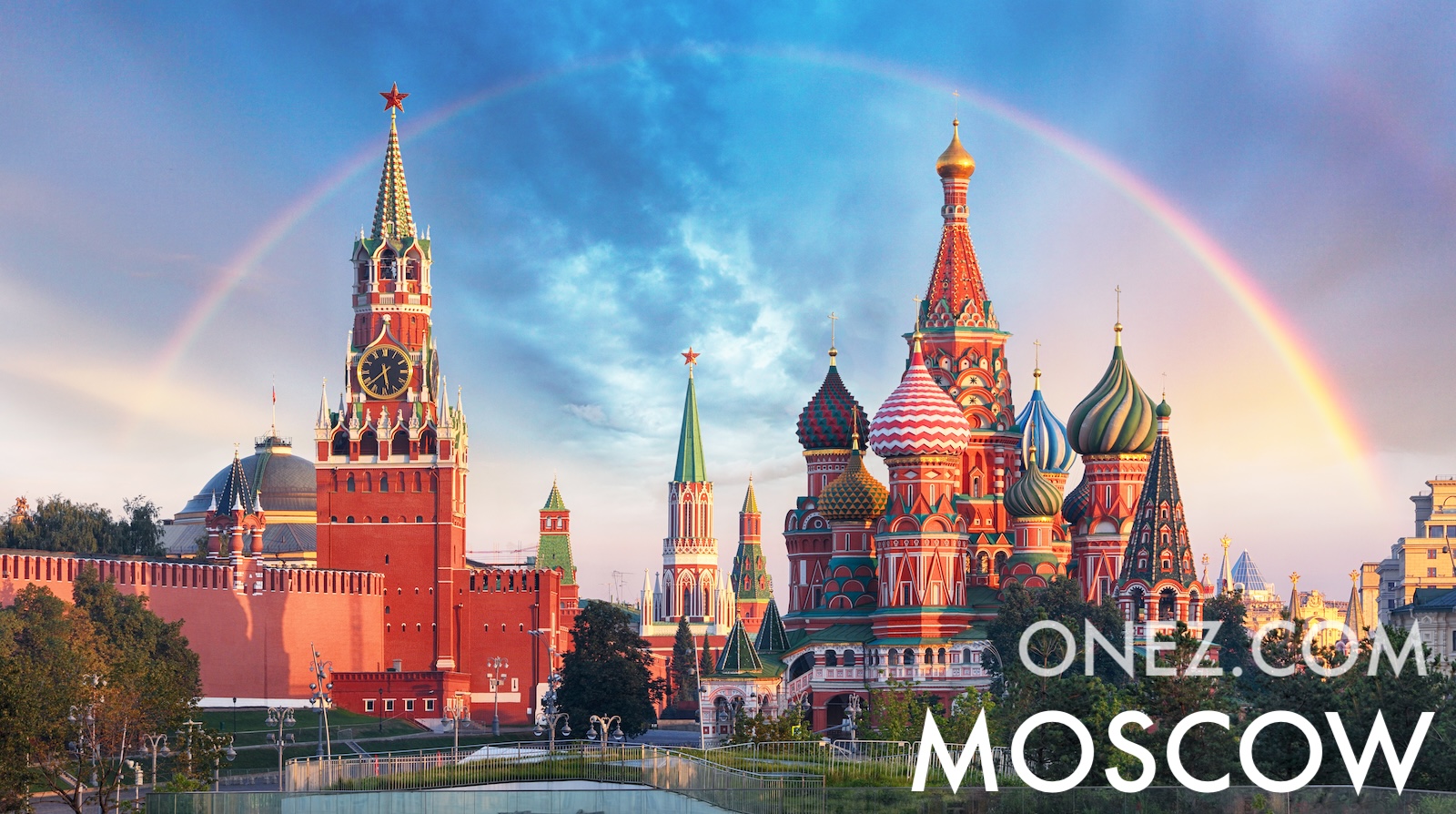
Russia is the largest country on Earth and spans eleven time zones. Lake Baikal holds around a fifth of all unfrozen fresh water in the world.
Russia is split into two main parts: European Russia and Asian Russia. The line that separates them usually follows the Ural Mountains and the Ural River. Even though the Asian side is much bigger, most of Russia’s people live in the European part.
Russia is a Country located in the Eastern Europe sub-region in the continent of Europe, member of CSTO - Collective Security Treaty Organization.
02000 km (1243 mi)4000 km (2485 mi)6000 km (3728 mi)8000 km (4971 mi)
Height
−301002505007501 0001 5002 0002 5005 524 m
−983288201 6402 4603 2804 9206 5608 20018 120 ft
-30 m (-98 ft), 100 m (328 ft), 250 m (820 ft), 500 m (1640 ft), 750 m (2460 ft), 1000 m (3280 ft), 1500 m (4920 ft), 2000 m (6560 ft), 2500 m (8200 ft), Max altitude 5524 m (18120 ft)
Sea depth
01506001 8003 2005 200+ m
04921 9705 91010 50017 060+ ft
0 m (0 ft), 150 m (492 ft), 600 m (1970 ft), 1800 m (5910 ft), 3200 m (10500 ft), deeper than 5200 m (17060 ft)
Permanent snow and iceWinter snow (approximate)
Height from west to east in Russia (approximate)
Height from south to north in Russia (approximate)
1Kara Sea (Northwest), Barents Sea (Northwest), East Siberian Sea (Northeast), Laptev Sea (Northeast), Sea of Okhotsk (East), White Sea (Northwest), Sea of Japan (Southeast), Bering Sea (Northeast), Arctic Ocean (North), Chukchi Sea (Northeast)0 m2Caspian Sea−28 m3Lena14 to 881 m
Population of Russia, 1960–2025
The World Bank: Population, total (SP.POP.TOTL): United Nations Population Division, national statistical offices
ranges from steppes in the south through humid continental in much of European Russia; subarctic in Siberia to tundra climate in the polar north; winters vary from cool along Black Sea coast to frigid in Siberia; summers vary from warm in the steppes to cool along Arctic coast