
From the Big Bang through human civilization development
Before the first city, the universe spent 13.8 billion years building everything a city needs: matter, stars to forge the elements, a planet, oceans, life, minds. This is that arc, from the Big Bang to the first civilization, sorted by date. Deep-time dates are best current estimates and grow more precise as they approach the present.
- 13.8 billion years ago — Big Bang — Space, time, matter, and energy begin. The universe starts as a hot dense point and expands. Only hydrogen and helium exist at first.
- 13.6 billion years ago — First stars and galaxies — Gravity pulls gas into stars. Inside those stars, heavier elements form: carbon, oxygen, iron, everything a planet and a body need. When stars die, they scatter these elements.
- 4.6 billion years ago — The Sun and Earth form — A cloud of gas and stardust collapses into our Sun. Leftover material clumps into the planets. Earth forms as a molten ball.
- 4.5 billion years ago — The Moon forms — A Mars-sized object slams into Earth. The debris settles into the Moon. That impact set Earth's tilt and spin.
- 4.4 billion years ago — First oceans — Earth cools enough for water to stay liquid. Comets and volcanic gas add more. The planet gains its seas.
- 3.8 billion years ago — First life — Single cells appear in the ocean, simpler than any bacteria today. Life begins as microscopic and alone.
- 2.7 billion years ago — Photosynthesis begins — Cyanobacteria learn to turn sunlight into energy and release oxygen as waste. This is the invention that will later reshape the whole planet.
- 2.4 billion years ago — The air fills with oxygen — After a billion years, that oxygen builds up in the atmosphere. It poisons most existing life but opens the door to everything complex. Called the Great Oxidation Event.
- 2 billion years ago — Complex cells — Cells with a nucleus appear. One cell swallows another and keeps it as a power plant. That merger is why your cells have mitochondria.
- 600 million years ago — First animals — Cells start living together as one body. The first soft animals, like jellyfish and worms, appear in the sea.
- 540 million years ago — The Cambrian explosion — In a short window, almost every animal body plan appears: eyes, shells, legs, spines. The ancestors of nearly all animals alive today start here.
- 470 million years ago — Life moves onto land — Plants colonize bare rock first, turning it green. Land becomes livable.
- 375 million years ago — First animals walk on land — Fish with strong fins crawl out of shallow water and become the first four-legged land animals. Every land vertebrate, including you, descends from them.
- 320 million years ago — Breeding away from water — Reptiles evolve the hard-shelled egg. Animals no longer need to return to water to reproduce. Life spreads deep inland.
- 230 million years ago — Dinosaurs and first mammals — Dinosaurs rise and dominate. The first mammals appear beside them, small and nocturnal, staying out of the way for 160 million years.
- 66 million years ago — The asteroid — A rock the size of a city hits Earth. Dinosaurs die out. Mammals survive in the gap and take over the empty world.
- 55 million years ago — First primates — Small tree-dwelling mammals evolve grasping hands and forward-facing eyes. The primate line begins.
- 7 million years ago — The human line splits — The ancestors of humans separate from the ancestors of chimpanzees. From here, one branch heads toward us.
- 3.2 million years ago — Walking upright — Australopithecus, including the famous fossil Lucy, walks on two legs while keeping a small, ape-sized brain. Upright walking comes before big brains.
- 2.6 million years ago — First tools — Early Homo starts making sharp stone flakes to cut meat. This is the start of technology and the first named toolmaker, Homo habilis.
- 1.9 million years ago — Fire and migration — Homo erectus controls fire and cooks food, which fuels a bigger brain. It becomes the first human species to leave Africa.
- 300,000 years ago — Homo sapiens — Our own species appears in Africa. Anatomically, these people are us.
- 70,000 years ago — The mind wakes up — Humans begin making art, jewelry, and complex tools, and likely full language. Behavior becomes fully modern. Small bands spread across every continent.
- 14,000 BCE — The dog — Wolves that scavenged near human camps grow tamer over generations. The dog becomes the first domesticated animal, thousands of years before farming, bred for hunting and guarding, not food.
- 12,000 BCE — Long-distance trade — Hunter-gatherer bands already swap goods across hundreds of kilometres: obsidian, shells, flint, ochre. Trade is older than farming, older than cities, older than money. Everything later is built on this habit of exchange.
- 10,000 BCE — Farming begins — Humans start planting crops instead of only hunting. Food surplus lets people settle in one place. This is the switch that makes everything next possible, and it triggers a wave of animal domestication.
- 9,000 BCE — Sheep and goats — The first food and material animals, tamed in the Middle East for meat, milk, wool, and hide. They convert grass humans cannot eat into food humans can.
- 8,500 BCE — Pigs — Tamed from wild boar in the Middle East and China for meat. Pigs need no grazing land and eat human scraps, which ties them to settled village life.
- 8,500 BCE — Cattle — Tamed from the wild aurochs for meat, milk, and muscle. Cattle become the engine of the plow, the pullers of carts, and the walking wealth that early societies count, trade, and tax.
- 7,000 BCE — The cat — Wildcats move into the first grain stores to hunt mice, and tolerate humans in return. The cat domesticates itself, drawn by the pests that farming created.
- 5,000 BCE — Llama and alpaca — Tamed high in the Andes, the only large pack and wool animals of the Americas. Their absence of an equivalent elsewhere shaped why New World civilizations had no wheeled transport or cavalry.
- 4,000 BCE — The donkey — Tamed in Egypt and the Horn of Africa, the first reliable pack animal for long-distance trade. Donkey caravans move the goods that build the first cities.
- 4,000 BCE — Water buffalo — Tamed in South and Southeast Asia for plowing flooded rice fields and for milk. It becomes the backbone of Asian rice farming, feeding the densest populations on Earth.
- 3,500 BCE — The first money — With surplus to trade, humans need a way to track value between strangers, since memory only works inside a small group. Useful goods become standard payment: grain, and above all cattle. Money begins as outsourced memory for favors owed. The words capital and pecuniary both come from the Latin for cattle. With money, writing, and a merchant class together, simple trade becomes commerce.
- 3,500 BCE — The first civilization — In Sumer, surplus food feeds people who do not farm: priests, rulers, soldiers, scribes. Cities, writing, and states appear. The first written records are not laws or poetry but accounts, tracking who owes what, so money and writing are born from the same need. Recorded history begins, and the Cradles of Civilization list starts here.
- 3,000 BCE — Bactrian camel — Tamed in Central Asia for hauling loads across cold high desert. It opens the overland routes that later become the Silk Road.
- 2,200 BCE — The horse — Bred for control in the Volga-Don steppes of Western Eurasia, this lineage spreads across the whole continent and replaces every local horse. It multiplies human speed and reach, and reshapes war, trade, and the movement of peoples ever after.
- 1,500 BCE — The chicken — Tamed from the wild red junglefowl in Southeast Asia, first kept for cockfighting and ritual, only later for eggs and meat. It is now the most numerous bird on Earth.
- 1,000 BCE — Dromedary camel — Tamed in Arabia for desert crossing on little water. It opens the incense and caravan trade of the Arabian deserts.
How water built the first cities
A city is a living thing. It takes in energy, moves it through itself, grows, and can die. Like every living thing, it runs on water. This is not a metaphor stretched too far, it is the reason every cradle below sits on a river or a coast, with not one of them inland and dry. The logic is a chain. Water gives a place reliable food, since predictable rivers mean predictable harvests. Reliable food makes surplus. Surplus feeds people who do not farm, and those people build the city. So the city forms where the water is, every time, on the Tigris and Euphrates, the Nile, the Indus, the Yellow River, the rivers of coastal Peru, and the Gulf rivers of Mexico.
Water does one more thing: it carries. A river and a coast are roads that move on their own. They let a city trade its surplus with cities far away, turning many separate settlements into one connected network. This is why the cradles cluster not only on water but on routes. Each city holds its own value, born from its water and its surplus, and the routes between them turn those separate values into a larger shared one. A city rich in surplus but cut off stays small. A city on water and on a route grows, because it feeds itself and trades with everyone the water reaches. Civilization is water plus connection, and the map of the first cities is the map of where those two met.
Cradles of Civilization
Civilization appeared on Earth at least six separate times, in six separate places, with no contact between them. Sumer, Egypt, the Indus Valley, China, Peru, and Mexico each invented cities, monumental architecture, organized religion, and record-keeping on their own. Two of these regions sat in the Americas, fully cut off from the other four, which proves the pattern: when humans farm enough food to feed people who do not farm, cities follow, rulers follow, temples follow, and writing follows. Archaeologists call these independent cases pristine civilizations. Everything else in history, including Greece, Rome, the Maya, and the Inca, descends from one of these six starting points. The list below is sorted by date and split in three parts: the settlements that came before civilization, the six independent cradles, and the cultures that grew from them.
Before civilization: the first settlements
These sites had permanent buildings and large populations, but no cities, no states, and no writing. They show the step between village and civilization.
- Göbekli Tepe, Turkey (~9500 BCE) — Hunter-gatherers built stone temples here before agriculture existed. The site reversed a core assumption: organized religion may have pushed humans toward farming, not the other way around.
- Jericho, Palestine (~9000 BCE) — The oldest known walled settlement on Earth. Its stone wall and tower prove organized collective labor 5,000 years before the first city.
- Çatalhöyük, Turkey (~7100 BCE) — A town of up to 8,000 people with no streets; residents walked on rooftops and entered homes through the ceiling. Large, dense, but with no rulers and no public buildings, so not yet a civilization.
The six cradles: civilizations with independent origin
Each of these six developed with no model to copy. They are the confirmed independent inventions of urban life.
- Sumer, Iraq (~3500 BCE) — The first full civilization. Sumerians built the first true cities, led by Uruk, home to 40,000+ people, followed by Ur with its great ziggurat and Eridu, which Sumerians themselves considered the oldest city on Earth. They invented cuneiform writing, the wheel, and written law. Every later Middle Eastern civilization built on their foundation.
- Egypt (~3150 BCE) — The Nile's predictable floods funded the first unified territorial state, ruled by one king over 1,000 km of river, from the capital Memphis, later Thebes, with the pyramids of Giza as its monument peak. Egypt held that unity, with interruptions, for 3,000 years.
- Norte Chico (Caral), Peru (~3000 BCE) — The oldest civilization in the Americas, contemporary with Egypt's pyramids, and absent from most textbooks. Caral built monumental platform mounds without pottery, without writing, and possibly without war.
- Indus Valley, Pakistan/India (~2600 BCE) — The largest of the early civilizations by area. Its cities Mohenjo-daro and Harappa had grid streets, standardized bricks, and household plumbing, yet show no palaces, no royal tombs, and a script nobody has deciphered.
- China, Yellow River (~1900 BCE) — Beginning at Erlitou and confirmed under the Shang dynasty at its capital Anyang, where the oracle bones were found, Chinese civilization developed bronze casting and a writing system that evolved directly into the characters used by over a billion people today. It is the only cradle with an unbroken cultural line to the present.
- Olmec, Mexico (~1500 BCE) — The mother culture of Mesoamerica, centered on San Lorenzo and later La Venta, where the colossal stone heads stand. The Olmec created the calendar system, the ritual ballgame, and the monument tradition that the Maya, Zapotec, and Aztec all inherited.
The heirs: civilizations that grew from the cradles
These cultures produced some of history's most famous sites, but each inherited its foundations from a cradle listed above.
- Monte Albán, Mexico (~500 BCE) — The Zapotec capital, built on a flattened mountaintop, holds some of the earliest confirmed writing in the Americas. It inherited the Olmec calendar and monument tradition.
- Nazca, Peru (~100 BCE) — Creators of the Nazca Lines, ground drawings up to 400 m long, visible in full only from above, made near their ceremonial capital Cahuachi. Their water tunnels still function in the desert today.
- Teotihuacan, Mexico (~100 BCE) — At its peak the sixth largest city on Earth, home to 100,000+ people, with pyramids that rival Egypt's in volume. Its builders' identity remains uncertain; the Aztecs found it in ruins and named it "the place where the gods were created".
- Moche, Peru (~100 CE) — Master metalworkers and the finest ceramic artists of ancient America. Their adobe pyramid Huaca del Sol used over 130 million bricks, and the royal tomb of Sipán ranks among the richest burials ever excavated in the Americas.
- Tiahuanaco, Bolivia (~550 CE) — An empire at 3,850 m altitude near Lake Titicaca, with precision-cut stonework fitted without mortar. Its agricultural raised-field system out-produced modern farming methods in the same terrain.
The countries of the first civilizations




What a city actually needs to grow
The six cradles all sat on rivers, which makes water look like the whole answer. It is not. A big river is neither necessary nor enough. Madrid grew large on a stream. Singapore, with almost no land and no river, became one of the busiest cities on Earth because it sits on the strait that every ship must cross. What a city needs is not one gift of geography but a stack of factors that line up in the same place. The biggest cities are simply where the most of them meet.
The journalist Tim Marshall, in Prisoners of Geography, shows how the physical map sets these limits at the scale of whole nations. His sharpest point corrects the river myth directly: a small river that ships can travel is worth more than a giant one they cannot. The United States grew rich on the connected, navigable Mississippi system that feeds one ocean outlet, while several of Africa's largest rivers, broken by rapids and waterfalls, carry far less trade despite their size. Marshall's other recurring factor is the port, especially one that does not freeze, which is why access to open sea has shaped the fate of nations for centuries. Geography, in his account, is a constraint a country cannot easily escape.
The factors that make a city grow fall into two groups. Geography supplies the first: usable water, not merely a big river; a position on a trade route, such as a river mouth, a strait, or a natural harbor; a coast or port for sea trade; defensible ground like hills, islands, or river bends; and flat, fertile land with room to expand and food to feed the growth. Human choice supplies the second: roads and links reaching in many directions, so the city trades with everyone and not just along one river; and political decision, since a ruler can name a place the capital and grow it against the map, as with Madrid, Brasília, and Washington.
Geography starts a city. What keeps it alive and worth living in is its form, and this is the question the planner Kevin Lynch spent his career on. In Good City Form, Lynch asks not where cities appear but what makes one good once it exists: whether people can read and move through it, whether it fits how they live, whether it serves the people inside it. His work is a caution against the idea that geography alone decides anything. The map opens the door, but human design determines whether what grows behind it is a good place or a failing one.
So the honest rule is this. No single factor builds a big city. Cities grow where several stack at once. In the ancient world, water was the one factor that could not be replaced, so every cradle sat on a river. As technology advanced, pipes carried water, engines crossed land, and ships crossed oceans, so the other factors gained weight and the stack could form in new places. This is why the first cities cluster on rivers and the largest modern cities cluster on coasts and trade routes. Geography sets the limits, human choice and design decide within them, and the greatest cities are where the map and the human hand agree.
How the appearance of the city split society
Before the city, human groups grew in four steps. Each step was larger and less held together by family than the one before. Anthropologists use this ladder to describe how societies scale up.
- Band (10–50 people) — Everyone is kin. Nomadic hunter-gatherers with no leaders and no ranks. This describes almost all of human history.
- Tribe (hundreds to a few thousand) — Several bands linked by family ties, language, and shared ancestors. Still flat and kin-based, led at most by a respected elder with no power to command.
- Chiefdom (thousands to tens of thousands) — The first permanent inequality. A chief and his family rank above the rest, and the rank is inherited. Family still organizes the group, but now some kin outrank others.
- State (tens of thousands and up) — Family stops being the glue. Strangers live together under a government, laws, taxes, and a standing force. The city is what makes the state possible.
The point where trust runs out
There is a rough limit to how many people one human can personally know and track, estimated at around 150 and known as Dunbar's number. Below that size, a group governs itself with no formal rules, because everyone knows everyone and reputation alone keeps order. Above it, strangers appear, and personal knowledge can no longer hold society together. Rules, roles, and enforcement have to replace it. Crossing this threshold is the moment a society is forced to invent government.
How the city split society into layers
Farming created stored surplus. Surplus can be owned, counted, and taken, and whoever controls it controls people. Control hardened into permanent rank, and rank hardened into inherited class. The flat society of the band became a pyramid, built roughly in this order from the top down.
- Priesthood — The temple stored and shared out the grain, so religious authority and economic control fused first. In Sumer the temple was the first bank.
- King and government — The chief's role became permanent and hereditary, supported by officials to tax, record, and command.
- Soldiers — A standing warrior class to defend the surplus and seize more. They protect the top and enforce the order.
- Merchants — A class living on the trade and exchange of surplus rather than on producing food.
- Peasants — The farming majority. They feed every layer above them and keep little.
- Slaves — The bottom, created by war capture and debt. Treated as property, not people, by the state.
The same machinery today
Modern states are this same structure scaled up. Family and reputation have been replaced by law, money, and bureaucracy, the tools that let millions of strangers live together. The oldest layer of behaviour still runs underneath. Near-identical neighbouring groups still mark hard boundaries between themselves, because their family and social networks were historically closed and rarely mixed. Groups that are almost the same tend to exaggerate small differences to stay distinct, a pattern known as the narcissism of small differences. An outsider can gain authority in a divided community precisely because he stands outside its local rivalries, so opposing sides accept him more easily than they accept each other. Growth and mobility slowly dissolve these boundaries, though a shared identity outlives the conditions that created it by a generation or more.
Where the biggest cities sit today
If water and trade routes built the first cities, the same logic should show in the biggest cities now. It does, with one change. The largest cities on Earth today are not on big rivers inland. They are on coasts, deltas, and river mouths, where a river meets the sea and river trade joins sea trade in one place. The type of water shifted from river to coast as trade went global, but water is still there under every one of them. The exact population order is disputed, since different methods put Tokyo, Jakarta, or Guangzhou first, so what follows groups the giants by the water factor each one stacks rather than by a single ranking.
- Tokyo, Japan — On Tokyo Bay, on the Pacific coast. A natural harbor plus the flat Kanto plain around it. Water for trade, land for spread.
- Jakarta, Indonesia — On Jakarta Bay on the north coast of Java, with thirteen rivers running through it into the sea. River and coast in the same spot.
- Shanghai, China — At the mouth of the Yangtze, on the East China Sea, centered on the Huangpu River. Its river-and-coast position made it the world's largest port.
- Delhi, India — On the Yamuna River, a tributary of the Ganges. One of the few giants that is inland, held by river water and by its role as the national capital, a political choice on top of geography.
- Mumbai, India — On the Arabian Sea coast, built on former islands joined together. A deep natural harbor made it India's trade gateway.
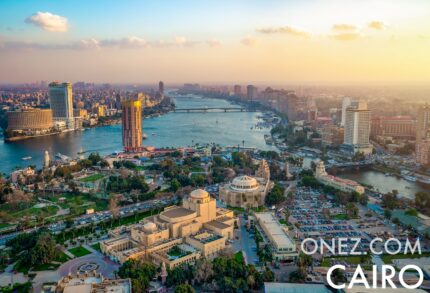
- Cairo, Egypt — On the Nile, at the head of its delta, the only top city carried by a single great river, the same Nile that carried ancient Egypt.
- São Paulo, Brazil — Inland on a plateau near the coast, the exception that proves the rule. It grew on coffee wealth and industry, not water, showing that when other factors stack high enough, they can outweigh a weak water position.


The pattern is clear. Almost every giant sits where a river meets the sea, stacking river water, sea trade, flat land, and often capital status in one place. The few inland giants, like Delhi, are held up by other factors, mainly political choice. This is the factor stack in action: no single cause, but water is present in nearly every case, now as it was at the start.
The world's great rivers, and why size does not decide
Rivers are ranked two ways, and neither one predicts where civilization grows. Length measures how far a river runs. Discharge measures how much water it moves. The list below is ordered by length, the figure most people know, with discharge and usefulness noted, because the gap between them is the real lesson. The longest and the most powerful rivers are often not the ones that built cities. What builds cities is water that meets farmland, mild climate, and a route to trade. The river that started civilization, the Euphrates of Sumer, is too short to even reach this list.
- Nile — 6,650 km — Egypt, Sudan, and East Africa — The longest river on Earth, yet one of the weakest by flow, about 3,000 cubic metres per second, because the Sahara evaporates most of it. It still carried ancient Egypt and carries Cairo today, proof that a route through farmland beats raw volume.
- Amazon — 6,400 km — Brazil, Peru, Colombia — The most powerful river on Earth by far, moving over 200,000 cubic metres per second, a fifth of all river water reaching the oceans. Yet its basin is rainforest with almost no large cities. Maximum water, minimum civilization.
- Yangtze — 6,300 km — China — Long and strong, about 30,000 cubic metres per second, and navigable deep inland. Shanghai sits at its mouth. One of history's great civilization rivers.
- Mississippi-Missouri — 6,275 km — United States — The navigable system that built American inland trade, thousands of kilometres of usable water feeding one ocean outlet. Navigability, not size, is its power.
- Yenisei — 5,540 km — Russia, Mongolia — Among the most powerful rivers on Earth, but it runs north through cold, empty Siberia. Huge water, few people.
- Yellow River — 5,464 km — China — The cradle of Chinese civilization, where the Shang dynasty rose. Its rich silt fed early farming despite frequent floods.
- Ob-Irtysh — 5,410 km — Russia, Kazakhstan, China — A long Siberian system, thinly settled, cold for much of the year. Length without warmth builds little.
- Paraná — 4,880 km — Brazil, Argentina, Paraguay — Feeds the Rio de la Plata estuary, home to Buenos Aires. A modern trade river more than an ancient cradle.
- Congo — 4,700 km — DR Congo and Central Africa — The second most powerful river on Earth, about 41,000 cubic metres per second, but rapids and waterfalls like Inga Falls block navigation. Huge water that trade cannot use, the clearest case that flow alone is not enough.
- Amur — 4,444 km — Russia, China — The long border river of northeast Asia, cold and lightly populated along much of its length.
- Lena — 4,400 km — Russia — A remote Arctic river, powerful but frozen much of the year and nearly empty of cities.
- Mekong — 4,350 km — China, Laos, Thailand, Cambodia, Vietnam — Feeds the dense rice civilizations of Southeast Asia. Its warm, wet, fertile delta supports huge populations.
- Mackenzie — 4,240 km — Canada — Long and cold, draining to the Arctic, one of the emptiest of the great rivers.
- Niger — 4,200 km — Guinea, Mali, Niger, Benin, Nigeria — Fed the medieval Mali and Songhai empires and today runs through Africa's most populous nation.
- Indus — 3,610 km — Pakistan, India, China — The river of the Indus Valley cradle, one of the six independent births of civilization.
Read the list against itself. The five longest include the Amazon, the Yenisei, and the Ob, none of which built a major civilization, because rainforest and frozen Siberia defeat even the greatest flow. Meanwhile the rivers that made history rank low or off the list entirely. The Yellow River sits near the bottom, the Indus barely holds a place, and the Euphrates, at just 2,800 km, is shorter than every river above and never appears at all, yet it carried Sumer, the first civilization on Earth. Size does not decide. Water that meets farmland, warmth, and a trade route decides. This is the factor stack again, written across the map of the world's rivers.